In The Know | Measuring what Matters + A Moment for the Agency Village

The media pulse decoded by your agency.
Contents:
- Navigating Media Measurement Strategy
- How an Agency Village Gets Results
- What the Team’s Been Listening to, Watching & Reading
Navigation Starts with Understanding What Matters
.
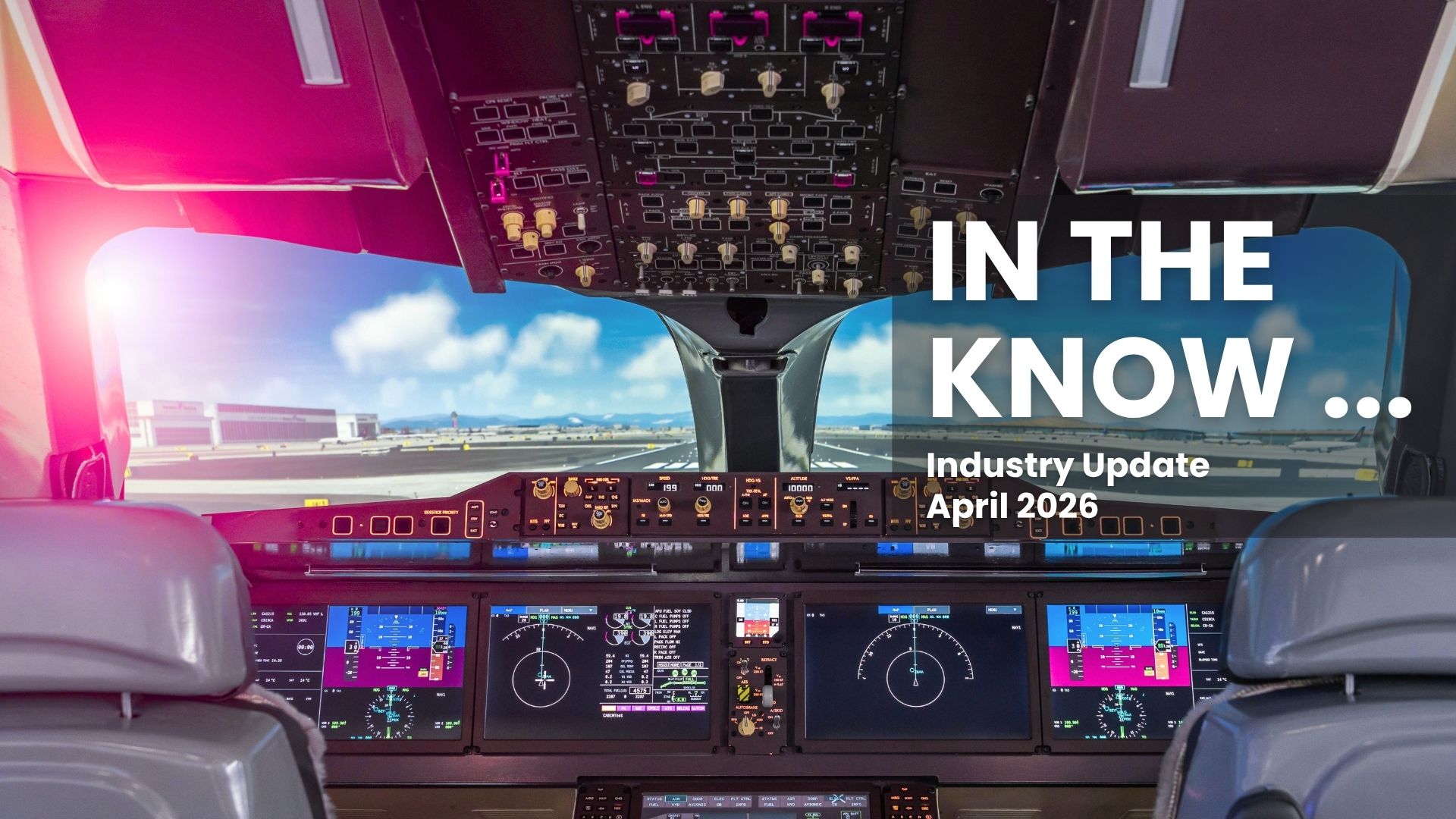
Think of an advertising campaign like the cockpit of an aircraft. Every button and dial exists for a reason, but if a pilot tries to monitor all of them simultaneously, the focus required to actually fly the plane disappears. The aircraft doesn’t crash dramatically. It just never leaves the tarmac.
It’s a challenge our industry is navigating: working out which data points matter, and which metrics signal real altitude versus cockpit noise. The point is to structure the media measurement strategy to reflect real outcomes.
You can’t solve that problem at the surface level. If the instruments aren’t calibrated properly, it doesn’t matter what they say.
Tagging architecture structured correctly from the outset unlocks both meaningful measurement and effective audience plays, forming the foundation of a stronger media measurement strategy. Combine this with a scorecard aligned to business growth, not vanity metrics inherited from the banner ad era, and the horizon starts to clear. Once those dials are under control, the focus shifts to the instruments that reflect how media actually behaves: signals like cost per attentive second, cost per quarter view, and engaged reach.
IAB Australia’s Future of Measurement initiative acknowledges the same tension, tackling challenges like more data and more fragmentation with frameworks that genuinely connect media activity to business outcomes. It’s a conversation AG is actively contributing to.
To be honest, this work on behalf of our clients never stops. The constant refinement of architecture, aligning the scorecard to what actually drives growth, and cutting through the noise are all critical, so campaigns aren’t just airborne but flying in the right direction.
– Angela Rogers, Head of Client Services
.
The Agency Village in Practice
Our client, The Star Brisbane has assembled a talented group of agency partners, and as a collective we form an Agency Village. The most recent experience has been Magic Round rugby league festival fan experience, Fan Land, a strong showcase of the different agency pillars coming together to drive performance and value to achieve business outcomes.
There’s a lot of talk in our industry about ‘collaboration’ but all too often that just means staying in your lane and delivering your piece. The difference on this campaign is that everyone has leaned in beyond their scope, in support of the program as a whole and the other agency partners, maintaining a clear focus on the outcome not just their deliverables. Shared outcome. That’s the important bit.
For the client, that means less fragmentation, faster decision-making, and a more cohesive outcome on the ground.
For the team at AG, that’s meant designing a media approach that doesn’t just drive awareness but actively enhances the experience on site. Working closely with Rizer (operations agency), the integration of talent, outside broadcasts (OBs) and media partners has been designed to complement the Fan Land activation and create real energy, not just noise.
We’ve also played a broader role in connecting the ecosystem. Maintaining open lines with Alt/Shift (PR agency), supporting PR moments, and leveraging our media partnerships to help amplify announcements and talent involvement. It’s not about owning those moments, it’s about making them bigger.
From a practical standpoint, it’s also about removing friction. We talk a lot at AG about removing friction and we walk that talk. In this case, that’s meant building production into the media package to support The Star’s internal team, and connecting the right people directly across agencies so things move quickly and more efficiently.
That shows up in the work. Things move faster, ideas connect more cleanly, and the end result feels joined up rather than stitched together.
At its best, an Agency Village isn’t a collection of suppliers, but rather a group of partners aligned on a shared goal: the client’s objective. For Fan Land, that goal is simple: highlight The Star as the must-visit destination during Magic Round.
When everyone is genuinely pulling in that direction, the output is always better and the commercial impact is stronger.
– Simon Watson, Business Development Director
.
Listening, Watching, Reading
What the team is currently consuming
.
Reflections on that Erwin Ephron article from Mediaweek, 2001
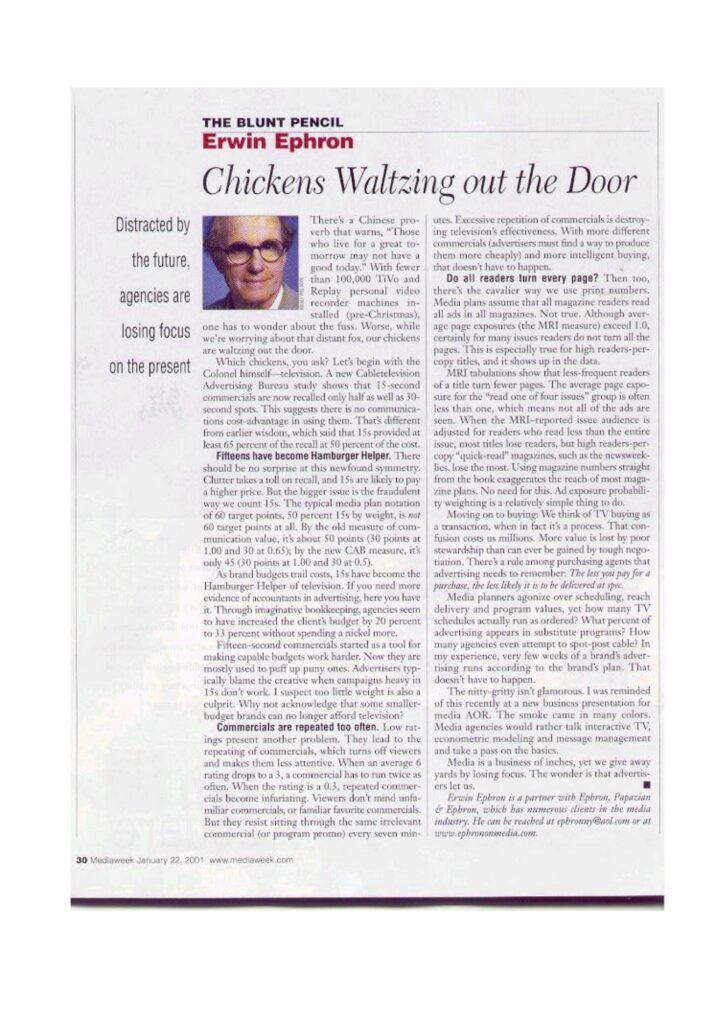
I went through the office storage shed recently (yes, I am finally emptying it). In my exploration through this Audience Group time capsule, I stumbled upon an old file of media articles about media strategy.
There, I found an article by Erwin Ephron from the turn of the century. In it, he was examining the importance (and mathematics) of reach over frequency, long before How Brands Grow made the same argument feel academically fashionable.
His point was brutally practical: stop hammering the same people again and again. Advertising does not need to beat people into submission. It needs to find more category buyers, more often, at the moments when memory can still do something useful.
What is interesting is how reach became the answer from two different directions. Sharp gets there through buying behaviour and market structure. Ephron gets there through media efficiency.
Different roads but the same conclusion. Most frequency is waste. (Randomised reach looks like frequency but isn’t, but we can talk about that another day)

.
Neuroscience
Neuroscience is becoming sexy again and I am paying attention. We’ve always known emotion plays a role in decision making, but more tools are becoming available to prove it and design for it. 95% of purchasing decisions are subconscious and emotional memory lasts 4x longer than rational recall. The science has been there for years, and now AI is finally giving us the horsepower to act on it at scale. Even Meta just dropped TRIBE v2 – an AI model that predicts how your brain responds to what you see and hear.
If you’re new to Neuroscience or have a curiosity, this article is worth a read. → Neuromarketing in 2026: How Brain Data is Rewriting Brand Strategy

.
Podcast Recommendation
I’ve been listening to a podcast featuring two of the world’s most influential thinkers, Brené Brown and Adam Grant, on how we live, lead, and think at a time when certainty wins and nuance gets overlooked. → The Curiosity Shop drops new episodes every Thursday.

.